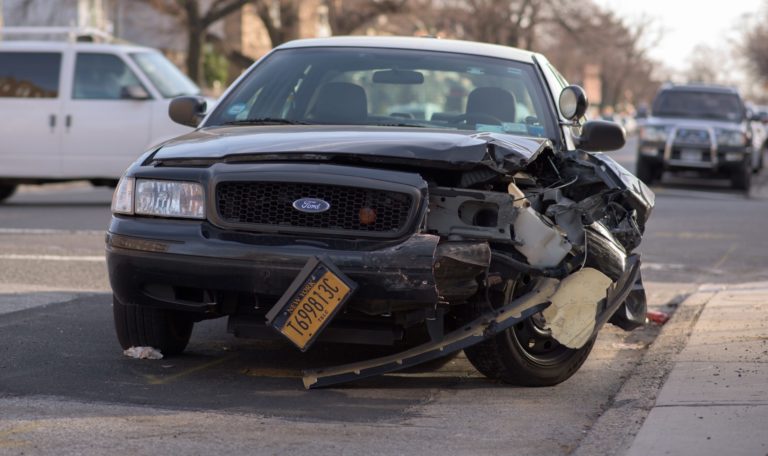
Maybe you were traveling out of state for a vacation, or you live near a state line and cross it regularly for work when a crash happens. Accidents like this raise immediate questions about where a claim should be filed.
When a collision involves an out of state driver, injured people may file a lawsuit either where the at fault driver lives or where the crash occurred. The short answer is yes, legal action can happen in a different state than where you live. In these cases, legal help for vehicle accidents Columbus often becomes important.
What Happens After a Car Crash When Insurance Laws Differ Between States?
Good news: your car insurance will cover you no matter where you are in the United States, not just the state where you live. So if you get in an accident out-of-state, you can still file a claim.
Each state is allowed to set its own requirements for auto insurance. Both Georgia and Alabama laws state that drivers must purchase a minimum of $25,000 in bodily injury liability coverage per person, $50,000 per accident, and $25,000 in coverage for property damage.
However, in Florida, for example, drivers are only required to purchase $10,000 in coverage for injuries and $10,000 in property damage.
Does this mean that if you are struck by a driver from Florida, where drivers are required to purchase much less insurance, that you can’t get more than $10,000 for your injuries? Thankfully, the answer is usually no.
If a driver from a state with a low insurance requirement causes an accident in a state with a high insurance requirement, the at-fault driver’s insurance will typically be required to meet the higher minimum.
On the other hand, if a driver from a state with a high insurance requirement causes an accident in a state with a low insurance requirement, their insurance will usually still be required to keep their own higher minimum instead of getting away with paying the lower amount.
However, out-of-state accidents can be tricky, so we always recommend discussing your case with a lawyer to learn how different insurance standards might apply to your situation, especially if you live in a fault state like Georgia or Alabama (where the at-fault driver’s insurance pays) and are involved in a crash in a no-fault state like Florida (where each driver’s own insurance pays for them) or vice versa.
What Happens After a Car Crash When Liability Laws Differ Between States?
Even more important than the difference in insurance requirements between states is the difference in liability laws between states.
For example, in Georgia, drivers can get compensation if they are injured in crashes, even if they are partially at fault, as long as they are not the majority at fault. As long as they are ruled to be 49% at fault or less, they can get compensation from the other driver’s insurance, although the amount of compensation they do get will be reduced in proportion to their fault.
However, in Alabama, if a driver is even 1% at fault for their crash, they can’t get any compensation at all.
This is important because the lawsuit needs to be filed in either the state where the at-fault driver lives or in the state where the accident happened.
Say an Alabama driver is injured in a crash in Alabama by a Georgia driver. The Alabama driver is 1% at fault, and the Georgia driver is 99% at fault. If the lawsuit is filed in Alabama, the Alabama driver can’t get compensation. But because they can also file the lawsuit where the at-fault driver lives (Georgia), they might be able to get compensation because the rules are different there.
However, the Georgia driver’s insurance provider will likely push for the trial to happen in Alabama, if the claim comes to that. That’s because there is a legal doctrine called “forum non conveniens” that says that even if a state has jurisdiction, a judge could choose to dismiss a civil lawsuit and force the victim to file somewhere else if another state is more “convenient.” That’s why we always recommend speaking to a lawyer as soon as possible after a wreck involving an out-of-state driver. We’ll fight to make sure your claim is filed in the state that is most convenient for you.
What to Do After an Out-of-State Auto Wreck
Getting into a car accident is a nightmare even when there are no injuries and only minimal damage. Getting into an accident when you are out of town, especially if you get hurt, is a disaster scenario.
Prepare Before You Leave Home
If you can, keep your insurance information with you at all times. When renting a vehicle, confirm ahead of time whether your policy covers damage and liability in a crash. Call your agent. Read your policy. If rental coverage is not included, purchase it in the state where you are traveling. These steps can prevent issues accident and injury law specialists often see after a wreck.
Get All the Information You Can
If you get into an accident while out of town, as inconvenient as it may be, never leave the crash scene without calling the police to file a report! It’s going to be vitally important to collect all the information you can at the scene, and a police report is a big part of that. If you won’t be in town long, this may be your only chance to do so.
In addition to collecting the contact information of everyone at the accident scene, you should take pictures of everything, including:
- All involved vehicles, especially the damage each incurred.
- Any debris on the road and its positioning.
- Any skid marks on the road.
- Any other property damage, such as to road barriers.
- The scene where the accident occurred, including street signs or traffic lights, overhanging trees or bushes, and so on – this could be used to help determine how the accident happened.
- Pictures of surrounding businesses – your attorney can reach out to these businesses later to determine if they captured security footage of the crash.
- The other driver, any passengers in either car, any witnesses, and the responding police officer, to help prove who was at the scene.
- Any injuries you sustained.
- The other driver’s license plate, driver’s license, insurance card, vehicle registration card, and vehicle (with make and model badges visible).
This is even more important in out-of-town accidents than in local accidents, since you won’t be as familiar with the area, if at all.
Report the Accident to Your Auto Insurance Provider
Even if laws about what type of insurance you need and how much vary from state to state, most auto insurance coverage extends past state lines, not just the state where it was purchased. Meaning, if you have a Georgia address but get into a crash in Alabama – or even California or New York for that matter – you are still covered. Some policies also cover accidents in U.S. territories, such as Puerto Rico, and even accidents that take place in Canada.
If the policy limits are different in the state where your accident occurred than in your home state, the policy will adjust if your company does business in that state. For example, if the minimum policy limits are higher in that state than in your home state, your policy will adjust higher. But don’t worry, if you are in an accident where the minimum requirements are lower, your policy will not adjust down.
For that reason, the process for reporting an accident while out of town isn’t any different than the process for reporting an accident that takes place where you live.
However, depending on how your insurance provider decides to run things, you may end up with either an adjuster in your local area or an adjuster local to the area of the accident.
Get Medical Treatment Right Away
Not all injuries are immediately obvious, so it’s smart to get checked out by a healthcare professional soon after the accident, even if you think you are uninjured or your injuries are minor.
If it’s only a short visit, it should be fine to wait until you get home as long as you schedule an appointment immediately and let your doctor know you’ve been in a car accident. But if you suspect you were injured, consider visiting an urgent care center in the area where you were injured rather than wait. The sooner you see a doctor, the more clearly your injuries can be linked to the accident, if you decide to pursue compensation.
Get Your Car Fixed
You have the right to take your car to any repair shop of your choosing after an accident, so the decision to choose a shop local to the accident or local to you is your decision – but it can complicate the reimbursement. That’s another reason to call your insurance right away! Your insurance may cover towing your vehicle to the shop of your choosing, even if that shop is at home, and hundreds of miles away.
Call Your Rental Agent
If you are in a rental car and get in a wreck while out of town, your personal auto insurance should also protect your rental car. However, things may be different if you aren’t visiting family or on vacation.
If you are using a rental car for business, plan on purchasing rental insurance at the counter of the rental agency. Most personal vehicle insurance will not cover rentals for business purposes. Call your agent to make sure and document what they tell you with a reply email or text.
Ready to Speak to a Lawyer?
An auto accident attorney experienced in cases involving out-of-state drivers will be able to help you determine where you can, and where you should, file a lawsuit after a crash that left you injured.
Even if you are not able to file a claim in the state where that lawyer practices, they can usually refer you to a lawyer in the correct state. At the Law Offices of Gary Bruce, our team offers free consultations, and is licensed to practice in both Georgia and Alabama. Call today to schedule your free case review.